Home / Treatments / Deep Tissue Massage
Deep Tissue Massage in Corsham
Slow, firm strokes and sustained pressure, working into the deeper layers of muscle and connective tissue.
What deep tissue massage is
Deep tissue massage is a therapeutic technique characterised by slow, firm strokes and sustained pressure. It works on the deeper layers of muscles and connective tissue to alleviate chronic muscle stiffness, realign tissues, and address muscle knots that impede movement.
While it may cause some discomfort, it should not be excessively intense — communication between client and therapist is key to an effective treatment.
That last point matters more than anything else on this page. Deep tissue is not a competition, and more pressure is not automatically better. If a muscle is being pushed harder than it wants, it braces, and bracing is the opposite of what we are trying to achieve. Tell me, and I will adjust.
Benefits of deep tissue massage
- Relieves chronic muscle tension
- Breaks down scar tissue
- Reduces inflammation
- Speeds up recovery from sports injuries
- Helps boost circulation
- Reduces stress and tension
- Improves sleep
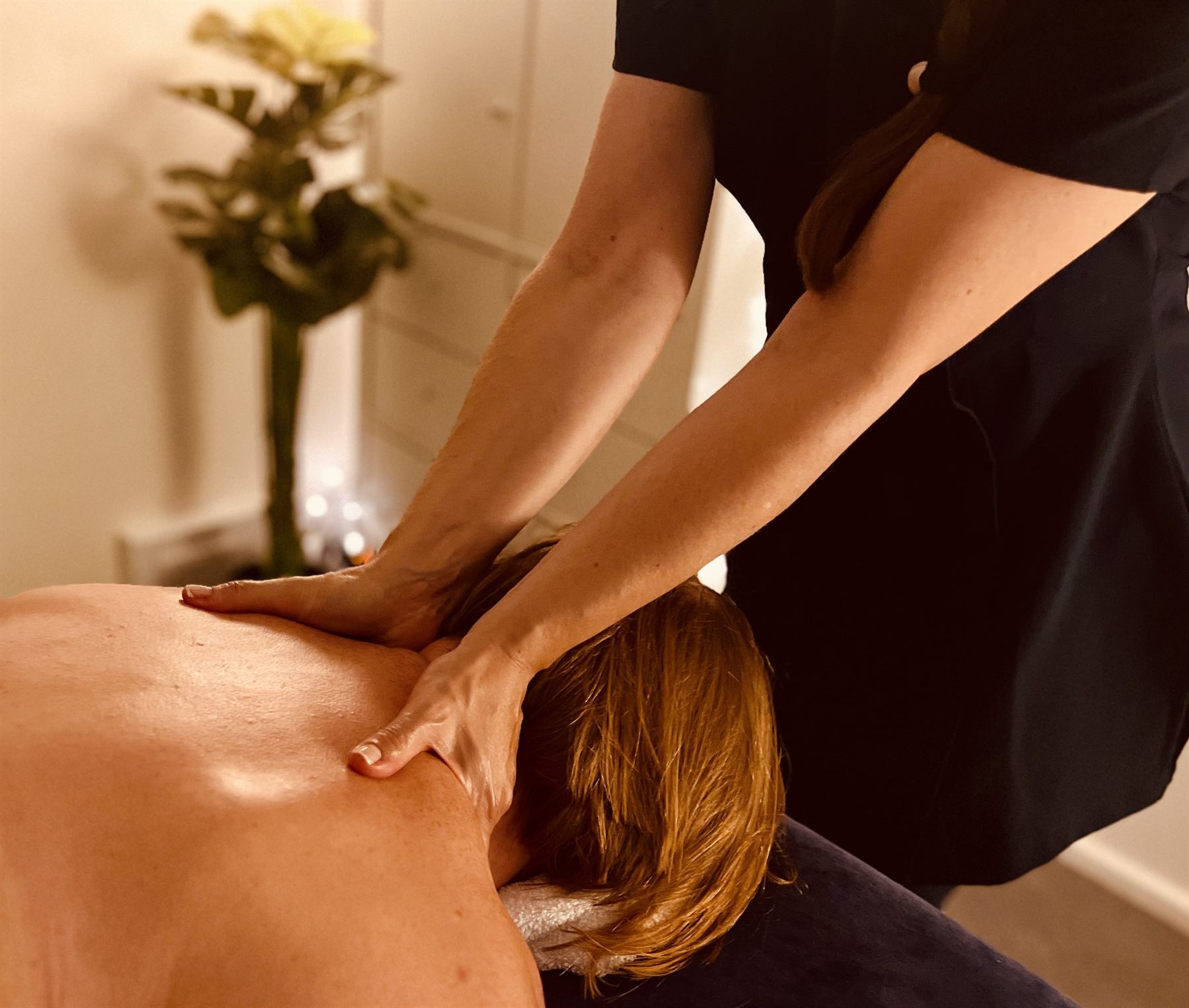
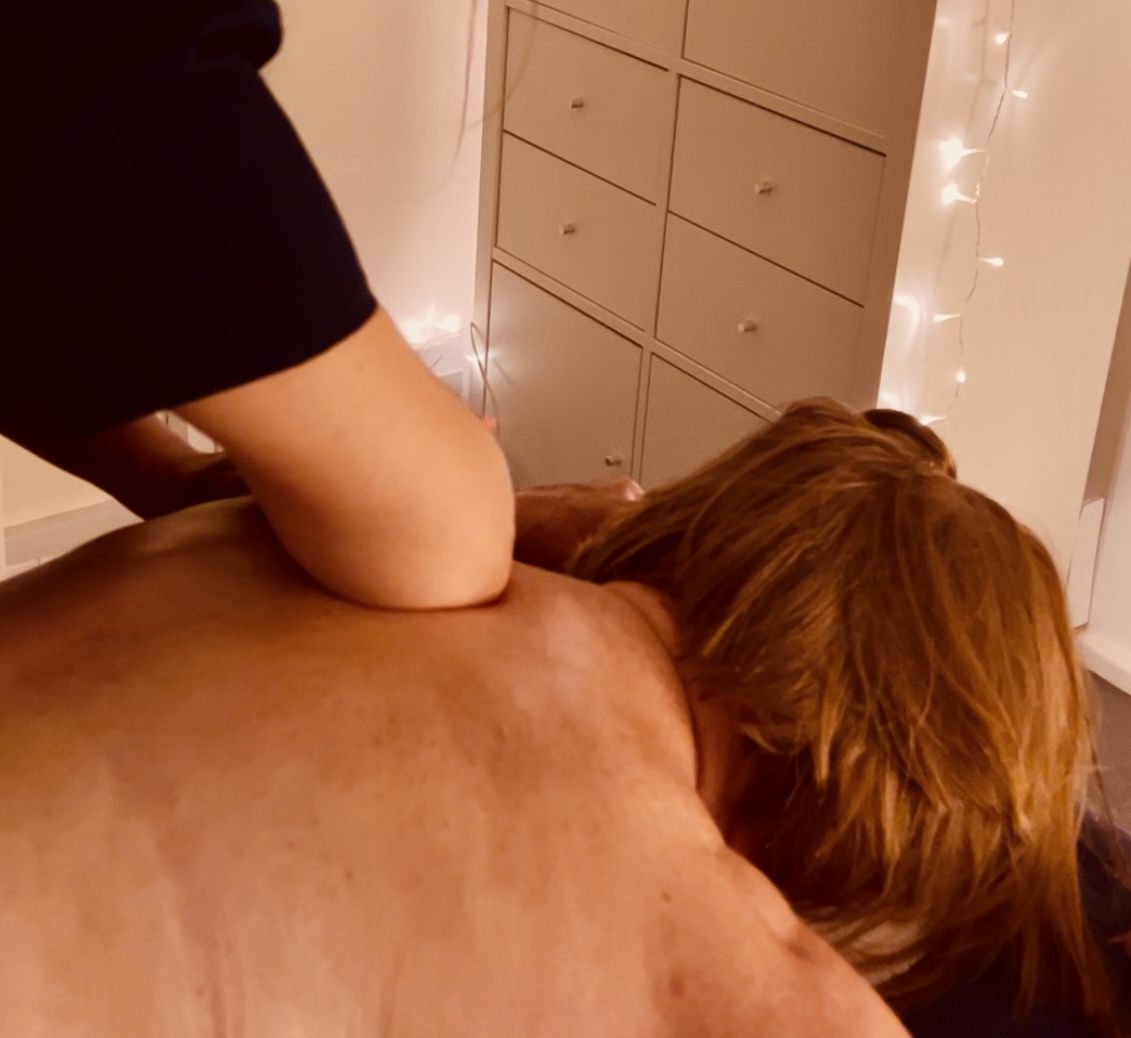
I now work Hands Free
I travelled to Wales to study Hands Free Massage with Darien Pritchard, the bodyworker, trainer and author behind much of the modern approach to it.
Instead of driving pressure through fingers and thumbs, Hands Free Massage uses the forearms, elbows and soft fists. The contact area is broader and the pressure more evenly spread, so it reaches deep without the sharp, pointed sensation that puts a lot of people off deep tissue work.
It also means I can sustain a stretch for far longer without my own hands tiring — which is better for you and considerably better for my thumbs after twenty-odd years.
If deep tissue has felt too sharp for you in the past, say so when you book. This is very likely the answer.
How the session runs
We start by talking about what is going on — where it hurts, how long it has been like that, what makes it worse, and whether anything has been diagnosed. That conversation shapes the whole treatment.
I always warm the area with broader, lighter work first. Going straight into deep pressure on a cold muscle achieves very little and is unpleasant besides. Once the tissue has softened, I work more slowly and specifically into the areas that need it.
Throughout, I will ask you to rate the pressure. A useful scale: a comfortable seven out of ten is where good work happens. Anything that makes you hold your breath or grip the couch is too much, and I would rather you told me straight away.
Afterwards
You may feel a little tender for a day or two, similar to the ache after a good workout. Drink plenty of water, keep moving gently, and avoid anything strenuous that evening. If soreness lasts beyond a couple of days, tell me and we will go lighter next time.
Deep Tissue Massage prices
Deep Tissue Massage
Deep tissue questions
Does deep tissue massage hurt?
It can be uncomfortable in places, usually in a way that feels productive rather than painful — the “good hurt” people describe when a knot finally lets go. It should never be excessively intense. If you are tensing, holding your breath or gritting your teeth, the pressure is wrong and I want to know.
Will I be sore afterwards?
Possibly, for a day or two, much like after exercise. Drinking plenty of water and keeping gently mobile helps. Significant pain, or soreness lasting more than about two days, is not expected — please tell me if that happens.
Is it good for sports injuries?
It helps speed recovery, break down scar tissue and restore range of movement, so it works well alongside training. For an acute injury — something that has just happened, or anything swollen and inflamed — see a doctor or physiotherapist first. Massage comes later in that process, not at the start.
Can I have deep tissue on just one area?
Absolutely, and for a first deep tissue session it is often the sensible choice. Thirty minutes focused entirely on back, neck and shoulders achieves far more than an hour spread thinly over the whole body.
How is this different from sports massage?
They overlap considerably. Sports massage is usually framed around athletic performance and events; deep tissue is framed around chronic tension and restricted movement, whatever caused it. The hands-on techniques have a great deal in common.
Other treatments
Swedish Massage
Flowing strokes to ease everyday tension and help you switch off properly.
Indian Head Massage
Ayurvedic work on head, neck and shoulders. Seated or on the couch, clothed if you prefer.
Hot & Cold Stone Massage
Heated basalt and chilled marble, for deep warmth and soothed inflammation.

Ready to feel the difference?
Get in touch to check availability, book a treatment, or just ask a question. I am happy to talk through what would suit you best before you book.